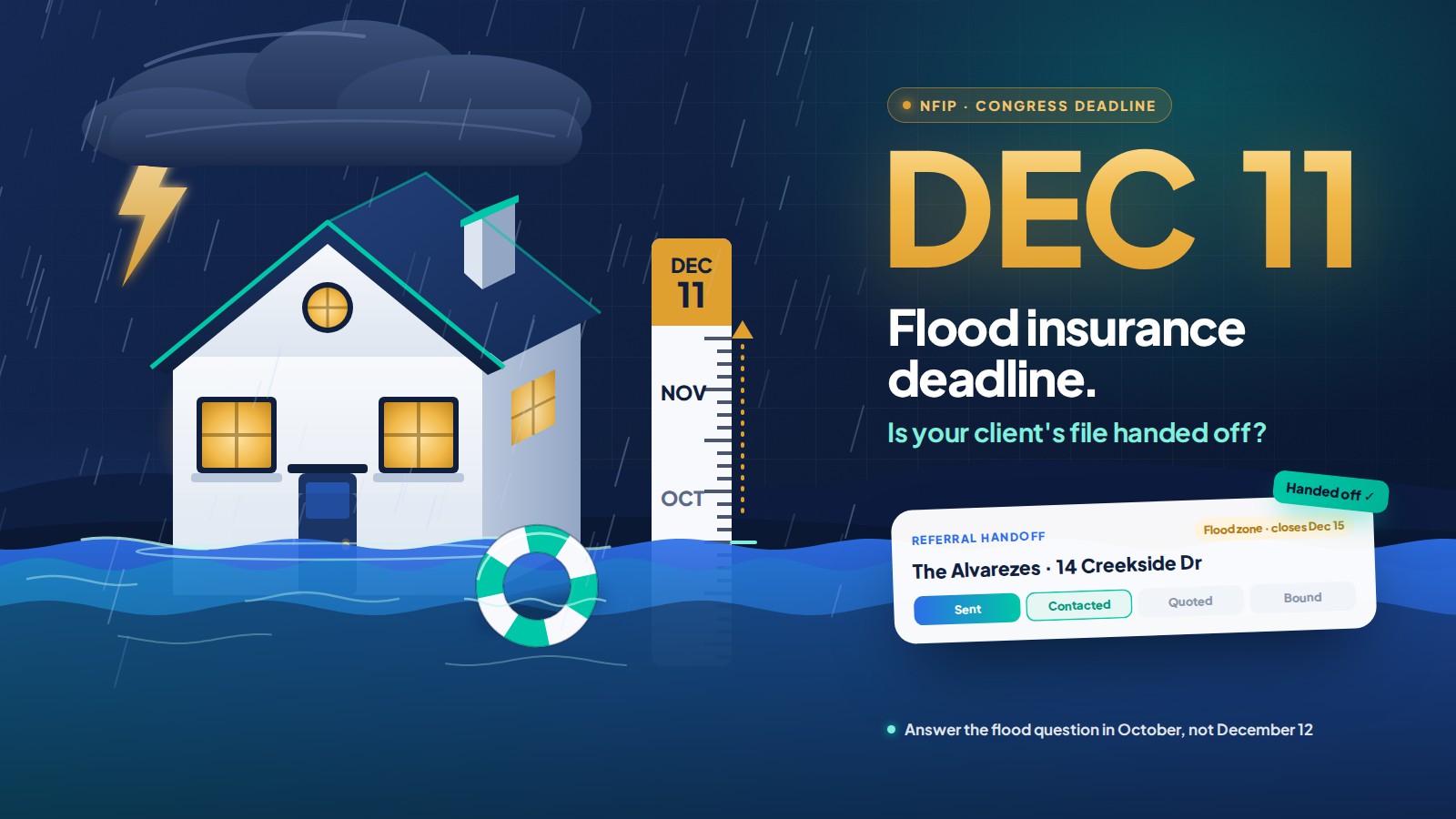
On September 2, 2026, the president signed the Continuing Appropriations and Extensions Act, 2027. Most of the headlines were about keeping the government open. Tucked inside was a date every real estate and insurance pro in a flood zone should have on the wall: the National Flood Insurance Program (NFIP) is now authorized only through December 11, 2026, at 11:59 p.m.
That's 66 days from the day this post went up. And here's the part most coverage skips: the risk isn't really about Congress. Nobody reading this can control what Congress does. The risk is a habit we all have, and that habit is what a lapse punishes.
What actually happened, in plain English
The same law that funds the federal government through December 11 also extends the NFIP to that same night. So the flood program and the next government funding fight now share one deadline, and it lands after the November midterms.
If Congress doesn't act in time, the NFIP can't sell new flood policies or renew existing ones until it's reauthorized. Policies already in force keep going until they expire, and claims still get paid as long as FEMA has the funds. Private flood insurance, the kind not backed by the NFIP, isn't affected.
Why does that matter for a home sale? If a property sits in a Special Flood Hazard Area (roughly, a 1% or higher chance of flooding in any year) and the buyer is using a federally backed or federally regulated mortgage, the lender has to require flood insurance. Most of that coverage still comes from the NFIP. No new NFIP policy can mean no loan, which can mean no closing. FEMA's own reauthorization page cites an NAR estimate that a lapse could affect around 1,300 property sales a day, roughly 40,000 closings a month.
"It'll get extended" is a hope, not a plan
To be fair, it usually does. The Congressional Research Service counts 36 short-term NFIP extensions since the end of fiscal year 2017.
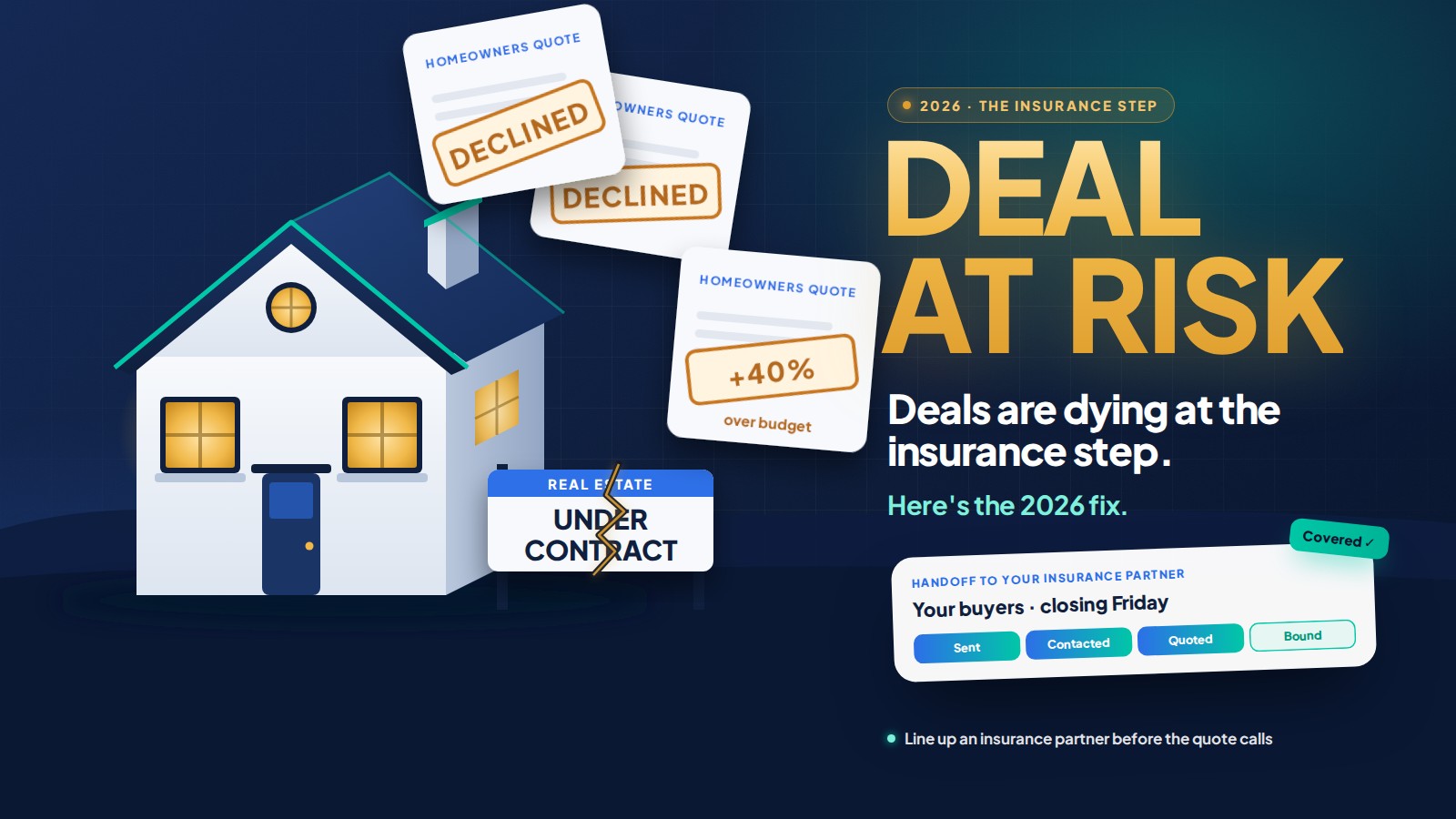
But look at the last twelve months. The program lapsed from October 1 to November 12, 2025, during the government shutdown, and again from February 1 to February 3, 2026. Both times it was eventually reauthorized, but buyers and lenders still had to work through the gap while it was happening. During the 2025 shutdown, some lenders set the flood requirement aside and kept closing, and others didn't. That's the honest picture: when the program lapses, outcomes depend on which lender, which property, and which people saw it coming.
And this deadline is tied to a funding bill again. Whatever you think happens on December 11, you'd want your pipeline ready either way.
The trap: flood is the last thing anyone orders
Here's the unique bit, and it's the reason this deserves more than a news recap.
An NFIP policy normally has a 30-day waiting period before it takes effect. But there's an exception: when flood insurance is required as part of making a mortgage loan, there's no wait. That exception is useful. It's also why flood coverage on a purchase tends to get handled late. There's no clock forcing anyone to start early, so it gets pushed behind inspection, appraisal and the homeowners policy.
In a normal season, that's fine. With a hard stop on December 11, it isn't. Do the calendar math on your own deals. A contract written in early November with a 30 to 45 day close lands right on or after December 11. If the flood question is still sitting in a "we'll handle it at the end" pile, that's the file that gets stuck.
So the move isn't to predict Congress. It's to pull the flood question forward, while every option is still on the table, and put it in front of someone who can actually answer it.
For real estate agents: a 20-minute pipeline sweep
Open your pending and soon-to-be-pending deals and, for anything that could close in December or later, check five things:
- Is it in a flood zone? If the property is in a Special Flood Hazard Area and the loan is federally backed or regulated, flood coverage is on the lender's list. Flag it.
- When is the closing? Anything on or after December 11 is in the window. Anything close to it deserves a backup plan.
- Does the seller have an NFIP policy now? NAR notes that during a lapse an existing NFIP policy can be assigned to the buyer, which keeps coverage in place without issuing a new policy. Find out early whether that option even exists on your deal.
- What does the lender say? During past lapses, regulators left it to lenders to decide whether to keep closing in flood zones. Ask your loan officer now, not on December 12.
- Who's handling the insurance side? This is the one that matters most. Hand the file to your insurance partner now, with the address, the closing date, the lender, and whether the seller has an NFIP policy, so they can map out NFIP, assignment and private flood options while all three are still on the table.
If you don't have an insurance partner you trust with a flood question, that's your real December 11 problem. Our guide to building a two-deep insurance bench walks through choosing a primary and a backup.
For insurance pros: build a December 11 list
You're the person who'll get the panicked call if this goes sideways. You can turn that around and be the person who called first.
- Pending purchases. Ask your real estate partners which of their deals touch flood zones and close after Thanksgiving. Get the files now.
- Renewals that come due around December 11. A lapse stops renewals, too. NAR notes that existing policies stay in effect until they expire, including a 30-day grace period. Know which of your clients sit close to that line.
- Private flood options. Private flood isn't affected by a lapse. Where it fits, have the quote ready before anyone needs it, and remind clients to review the policy details carefully.
Then tell your agent partners you did it. A short "I went through your December closings, here's where we stand" is the kind of message that earns the next ten referrals. If speed is your edge, our first-hour playbook covers what to do the moment a handoff lands.
Where Refervia fits
This is a handoff problem, and handoffs are what we built Refervia for. When you send a referral in Refervia, the client, property, closing date and notes travel together in one place, so your insurance partner gets "flood zone, closes Dec 15, seller has an NFIP policy" instead of "can you call this person?" Then you both see the same live status as it moves from contacted to quoted to bound, and you can message each other right next to the referral instead of chasing it by text. On Pro and up, a client status link lets your client see where their referral stands too, without any phone numbers or emails on it.
If you're an insurance pro, Refervia is where those handoffs land with the context already attached. See how it works for insurance professionals. Curious what a handoff carries and how statuses work? The Refervia FAQ walks through it. You can create your free account and invite your first partner in a few minutes, and partners join free. Plans for teams are on the pricing page.
The short version
- The NFIP is authorized through December 11, 2026, the same night as the next federal funding deadline.
- It has lapsed twice in the last twelve months. Plan as if it could happen again.
- Flood coverage tends to get handled last because lender-required policies skip the usual 30-day wait. A hard deadline turns that habit into risk.
- Sweep your pipeline now: flood zone, closing date, seller's policy, lender's stance, and a real handoff to your insurance partner.
None of this is legal, lending or insurance advice. Rules vary by lender and policy, so confirm the details on every deal with the loan officer and a licensed insurance professional. The point is simple: answer the flood question in October, not on December 12.