Dana Whitaker hasn't shown a house since March. After eleven years selling homes in Decatur, she had twins, and weekend showings stopped fitting her life. She didn't let her license go. She moved it to a referral brokerage, and now the only thing she does with it is refer.
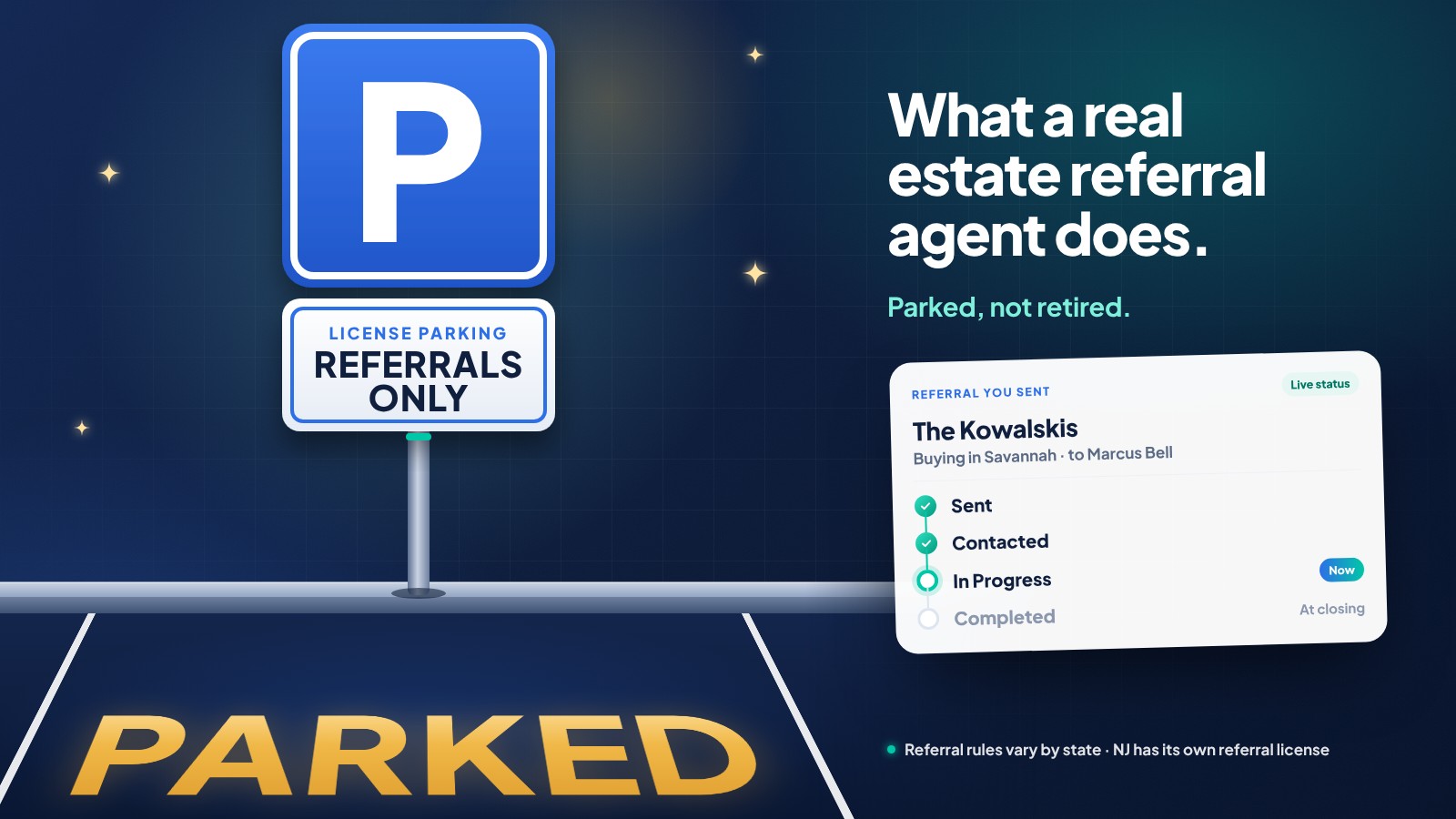
Her past clients still call her first. Last week it was the Kowalskis: a new job in Savannah, and they want to buy before school starts. Dana doesn't work Savannah and isn't taking buyers anywhere, so she gets their written OK and sends them to Marcus Bell, an agent there she trusts.
That's the whole job of a real estate referral agent. The harder part comes after. The Kowalskis are Marcus's clients now, their closing is months away, and Dana is the one person in the deal who can't see any of it.
This is general information, not legal advice. Referral rules come from state license law, your brokerage's policies and federal law, and they differ from state to state. Check with your broker or your state's real estate commission before you change your license.
Parked, not retired
A real estate referral agent is a licensed agent who doesn't work deals. When someone they know wants to buy or sell, they introduce that person to another agent. If the deal closes, the receiving agent's brokerage pays a referral fee to the referral agent's brokerage, on the terms the two brokerages agreed to.
People call it parking your license. The license stays with a broker, but the work changes from showings, offers and closings to introductions. It tends to fit agents who want to keep their license and their relationships without working deals:
- a new parent, or someone caring for family
- an agent easing toward retirement
- an agent moving to a state where they aren't licensed
- someone with another full-time job
Some agents move their license to a brokerage set up only for referrals. Others ask their current broker whether they can stay on in a referral-only role. Either way, a broker still holds the license and supervises the work.
Two states, two rulebooks
What a referral agent can do, and what it takes to stay licensed, depends on the state. New Jersey and Georgia show how far apart the rules can be.
New Jersey: a license just for referrals
Since July 1, 2011, New Jersey has licensed referral agents separately from salespeople and brokers.
- One broker. A referral agent works under the supervision of one broker and can't hold a salesperson or broker license at the same time.
- Referrals only. They refer people to their own broker or, if that broker authorizes it, to another licensee, notifying the broker in writing or electronically each time.
- A long list of don'ts. No showings or open houses, no negotiating, no listing or buyer agreements, no comparative market analyses, and no listing details beyond what's on public websites.
- Paid by their broker. All compensation for a referral is paid by the broker they're licensed with.
New Jersey referral agents don't take continuing education. Instead, their broker reviews those limits with them when they're licensed and at every renewal, and certifies to the state that it did. Going back to selling means changing the license type, and that takes continuing education.
Georgia: the regular license, kept active
Georgia has no separate referral license. Its license law names the job outright: a person who, for a fee, holds themselves out as a referral agent to find buyers, sellers or tenants is acting as a broker, and needs a license to do it. And a license on inactive status can't be used for brokerage at all, except on property the licensee owns.
So a Georgia referral agent keeps an active license, held by a Georgia broker, and follows the same rules as every other active licensee:
- Continuing education. 36 hours each renewal period, 3 of them on license law. Georgia licenses renew every four years.
- The client's written OK. Get the client's written agreement to the referral, and tell them whether you'll receive anything for it.
- Paid through your broker. Taking a fee from anyone but the broker who holds your license, without that broker's consent, is against the license law.
Your state may look like New Jersey, like Georgia, or like neither. Start with your state's real estate commission, and talk to your broker before you move your license.
How the money moves
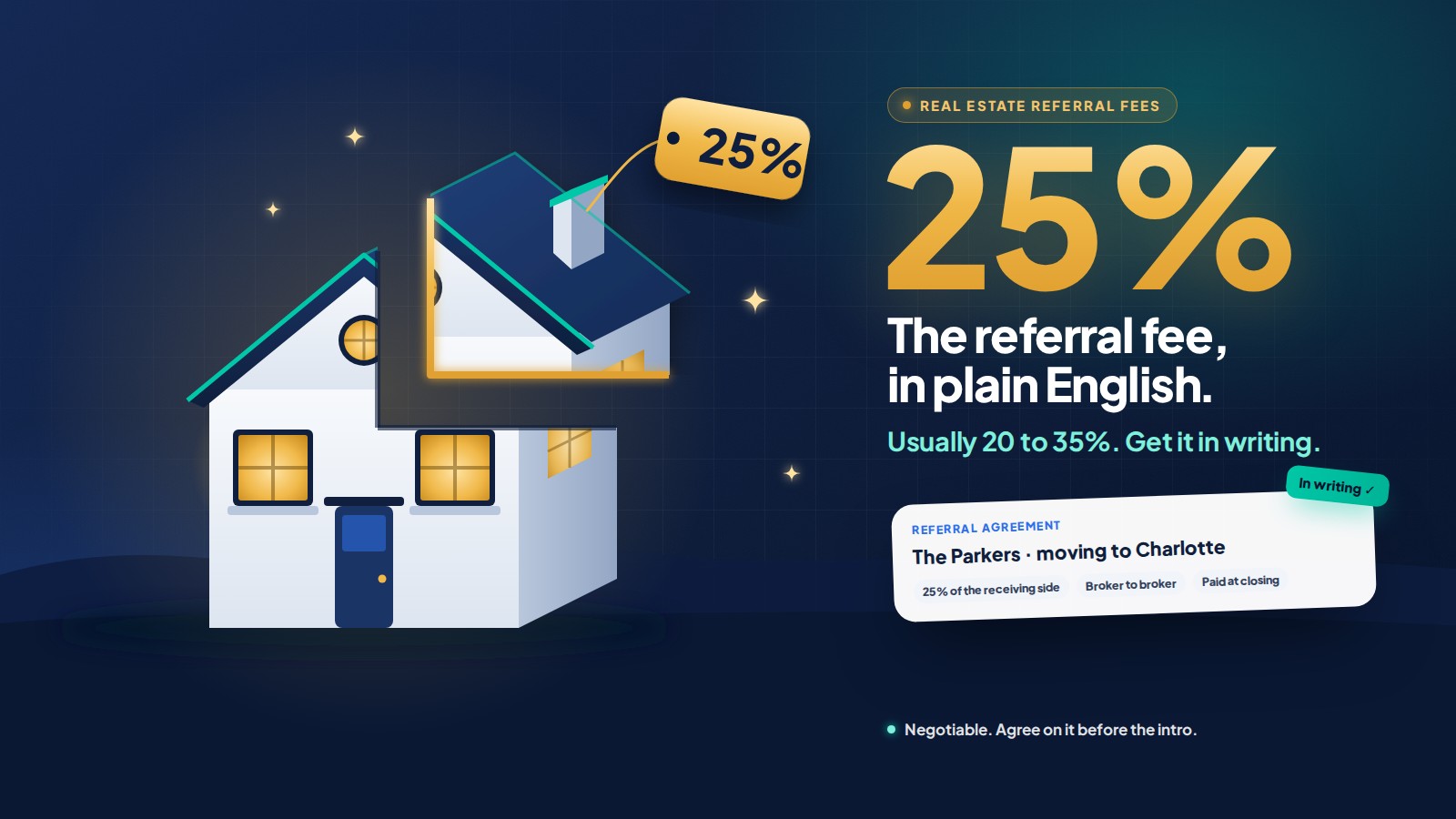
The money doesn't go from one agent to the other. When the Kowalskis close, Marcus's brokerage pays the referral fee to Dana's brokerage, and Dana's brokerage pays her share under her agreement with it. The amount is whatever the brokerages agreed, usually a percentage of the receiving agent's side. The referral fee guide has the math.
Federal law is why this works between agents at all. RESPA, the federal law that bans referral fees for settlement services on most home loans, makes an exception for "payments pursuant to cooperative brokerage and referral arrangements or agreements between real estate agents and brokers." That exception covers agents and brokers only. A parked license doesn't make it OK to take a fee from a lender, a title company or a home insurance agent for sending them a client.
Insurance referral payments are restricted in many states on top of that. In Georgia, only licensed insurance agents, agencies, subagents, counselors and adjusters may pay or accept insurance commissions or other valuable consideration.
The part nobody tracks
Here's the catch. A referral agent's work is a deal they aren't allowed to touch, run by an agent at another brokerage, on someone else's timeline. In New Jersey, the rules don't even let them pass along listing details beyond public websites. The fee is usually paid only if the deal closes, and a closing can be months away.
So the job doesn't end at the introduction. Four habits keep a referral from getting lost:
- Put it in writing before the intro. Both agents, both brokerages, the client, the fee and an end date. Here's what a referral agreement should cover.
- Agree on the updates. Ask for three: when the receiving agent reaches the client, when there's a contract, and when it closes or falls apart.
- Set a check-in date. Put it on the calendar for the week the closing should happen, not whenever you happen to remember.
- Keep your own record. The client, the date, the agent, the agreement and the latest status. Your broker will ask, and a year from now, so will you.
If a referral agent sends you a client
The receiving side has work to do too. In Georgia, the broker who receives a referral must disclose the referral payment to the client in writing, no later than closing. And you're the referral agent's only window into a deal they're counting on.
Send those three updates before anyone asks. A referral agent keeps hearing from past clients for years, and they remember who kept them posted. Say thanks, then say what happened covers the two messages that keep a partner sending.
Where Refervia fits
Refervia isn't a referral brokerage, and it isn't a place to park a license. It doesn't hold licenses, and it never calculates, collects, splits or pays referral fees. Your agreement and your brokers handle all of that, and the FAQ says so plainly.
What it does is the part a referral agent can't do from the sidelines: keep every handoff, and where it stands, in one place both agents can see.
- One handoff, one status. The client's details, timeline and notes go over together, and you both see the same live status as the receiving agent moves it from Contacted to In Progress to Completed.
- The rules before you send. On every plan, a handoff check before each send shows the referral-fee rules for that handoff, including Georgia's own when either of you works there, and asks you to confirm your client agreed to be referred. They're reminders, not legal advice, and they don't replace the written agreement your state may require.
- A reminder, not a guess. Add a follow-up date and you get a reminder on the day. On Pro and up, automatic reminders nudge a partner who hasn't marked your referral Contacted within 24 hours.
- The agreement, signed. On Pro and up, send your brokerage's referral agreement to the receiving agent to e-sign, and you both keep the signed copy. Refervia delivers it but isn't a party to it.
Referrals you receive are never capped, on any plan, Free included. Here is what makes Refervia different, and every account type can create a free account.
A parked license still sends clients. Make sure you can find every one of them again.