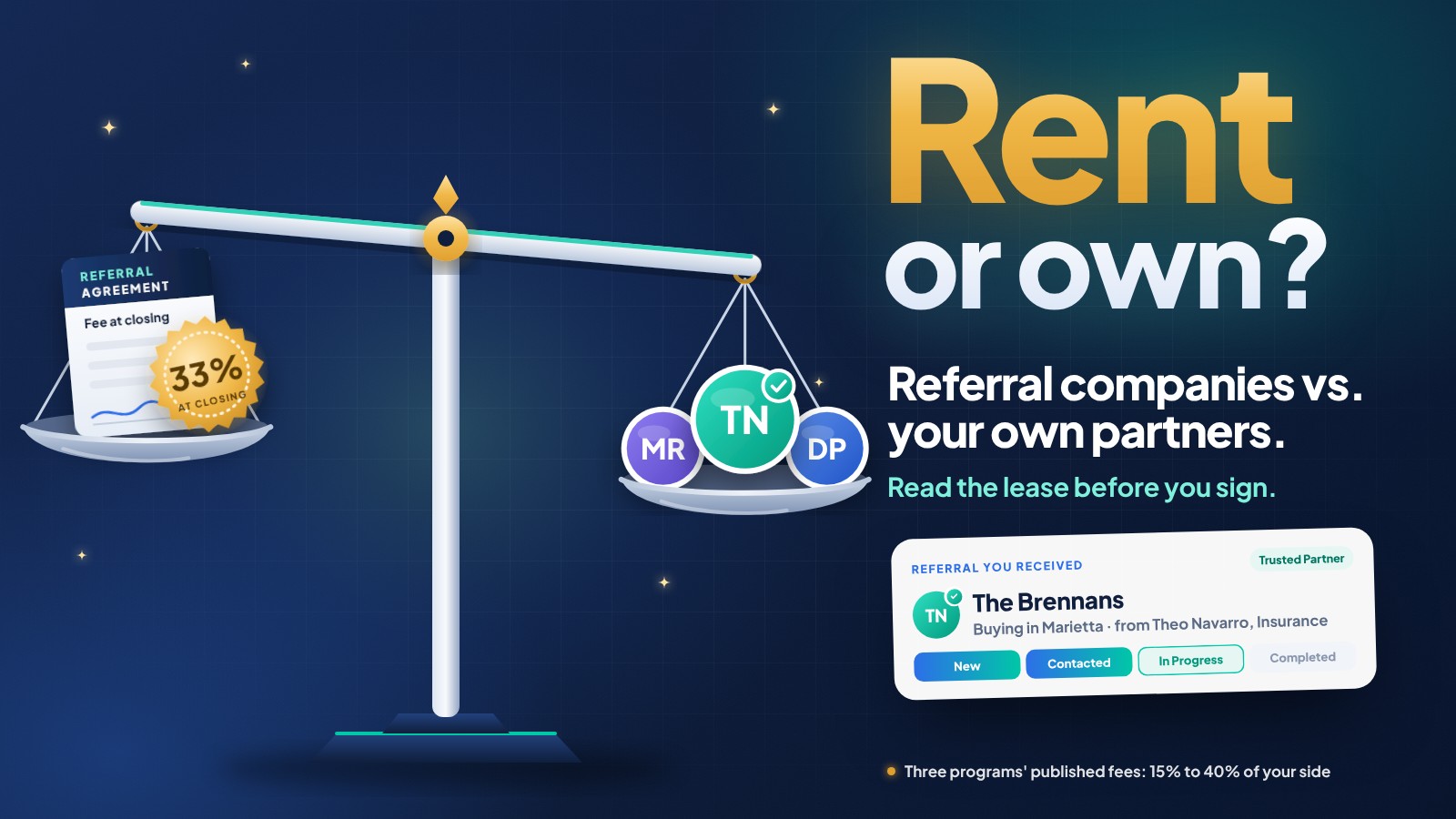
Imani Brooks closed two houses in Marietta in September, both at $385,000. Same commission rate on her side, the same number of showings, the same late-night scramble over an inspection report. One check came out about a third smaller.
The smaller check paid for an introduction. Those buyers, a couple relocating from Columbus, came through a referral company, and its fee came off the top at closing: 33 percent of her side of the commission, before her broker's split. The other buyers, the Brennans, came from Theo Navarro, an insurance agent who has quoted her clients' homeowners policies for three years. Theo didn't send a bill. He sent a text: "They already trust you. I told them how you handled the Delgado closing."
Both clients were worth having. Only one came with a fee, and a clause that can follow that client for years. That's the real choice behind real estate referral companies: renting introductions, or owning the relationships that send them.
What real estate referral companies actually sell
A real estate referral company finds people who asked for an agent, usually on its own website or app, and connects them with agents in its network. Most charge nothing up front. You sign a referral agreement, and when a client it sent you closes, the company is paid a referral fee out of your commission, through your broker.
The details differ from one company to the next, and they matter:
- How you meet the client. Zillow Preferred introduces you to home shoppers on a live phone call and asks for brief status updates as you work toward a closing. Agent Pronto says it may connect a client with up to three agents, so you may be one of several calls they take.
- What the fee comes out of. The programs that publish their terms figure the fee on the gross commission for your side, before your broker's split, so a 33 percent fee is a third of the whole commission. How that cost is shared between you and your brokerage is up to your broker's policy.
- What else it costs. Zillow Preferred requires a Follow Up Boss subscription. HomeLight adds a 3 percent late fee for each 30-day period a referral fee goes unpaid.
- What it expects from you. Zillow says partners who perform well start receiving a larger share of the connections in their market, so speed and follow-up shape how many introductions you get next.
Read the lease before you sign
If the fee is the rent, the lease term is how long that fee follows the client. It's the clause agents skim, and it's the one that can surprise you two years later. Here's what three programs published when we checked on October 31, 2026:
- Zillow Preferred: 15 to 40 percent of your side, depending on the property's ZIP code and price, and 40 percent on seller connections. The fee applies to up to two transactions with the same client: the first within two years of the introduction, the second within two years of the first.
- HomeLight: 30 or 33 percent in its current agreements, on any closing within three years of the most recent introduction.
- Agent Pronto: typically 25 to 35 percent, stated before you accept the referral, on every transaction with that client for three years from the day you accept.
So if the Columbus couple sells that house in two years and buys a bigger one, Imani may owe a fee on that deal too, depending on her agreement. Terms change, as well. Zillow can change its fee for new connections on 15 days' notice, and Redfin says changes to its posted fee schedule take effect 30 days after they're posted. Read the agreement in front of you, not a blog post (this one included).
When renting makes sense
None of this makes a referral company a bad deal. Plenty of buyers and sellers have nobody to ask for an agent. A referral company finds them, and somebody has to help them. Renting introductions can be the right call when:
- You're new to the business or new to a market, and nobody there knows your name yet.
- You have more open time than clients, and a closing with a fee beats an empty month.
- You treat it as rent-to-own. Once the fee window closes, the relationship is yours, as long as you earned it.
What you own when partners send the client
Most clients still arrive the old way. In NAR's 2025 Profile of Home Buyers and Sellers, 66 percent of sellers found their agent through a referral or went back to an agent they had worked with before, and more than nine in ten buyers said they would use their agent again. Those referrals come from people who already know your work: past clients, and the professionals who see the same deals you do.
A bench you own usually starts with four people:
- An agent in each market your clients move to. Referral fees between agents are allowed, paid broker to broker, on terms the two of you agree to in writing. Our referral fee guide covers how that works.
- A loan officer, who often meets buyers months before they call an agent.
- An insurance agent, who talks to homeowners at every renewal. Good ones ask every client about moving.
- A title or closing pro, who watches deals in your market cross the finish line every week.
With the last three, the relationship runs on service, not fees. On a home sale with a mortgage, federal law (RESPA) doesn't allow giving or taking anything of value for referring settlement services like a loan, title work or homeowners insurance, and its exception for referral fees covers real estate agents and brokers only. State license laws add their own limits, so talk to your broker before you set up any arrangement.
So what keeps those partners sending? How their clients are treated. Answer within the first hour, keep the status where both of you can see it, and say thanks, then say what happened. Owning has a down payment: a few coffees, the first client you send their way, and the follow-through that makes them look good to the people they referred. What you get back is a client with no fee window attached, and nobody else holding a piece of the relationship.
Where Refervia fits
Refervia isn't a referral company. It doesn't sell leads, route clients for pay or take a cut of anything. It's the desk for the second kind of referral, the ones you and your own partners send each other. Send a client from your Referral Desk, and you both see every status as it changes, from New to Completed.
Need someone in a market where you don't know anyone yet? The Partner Network lists Refervia members by profession and location, on every plan including Free. Verified and active members show first, and nobody can pay for a higher spot. Send a request to connect, and once they accept, you're trusted partners: no fee window, no lease.
Here's what makes Refervia different, and the real estate desk shows how it works for agents. Create your free account and invite the partners who already send you clients.